
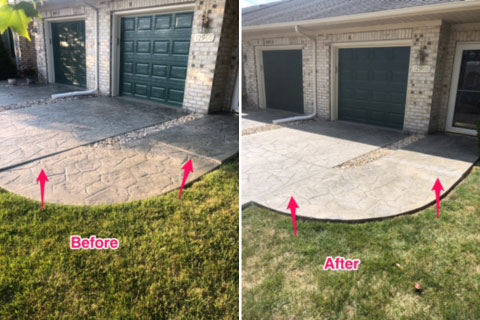
That wobbly patio table or the sidewalk corner that’s a constant trip hazard isn’t just an annoyance—it’s a common sign of shifting ground in Maryland. When the soil beneath a concrete slab shifts or washes away, it can cause uneven surfaces and create safety issues.
For years, the only fix was a messy, expensive tear-out. Today, a modern process called foam lifting—which contractors may call “polyjacking”—offers a faster and less disruptive solution. By injecting a powerful, expanding foam beneath the slab, it can be precisely lifted back into place in hours, not days.
However, the greatest benefits of responsible foam lifting come from knowing when to say no. The most important thing a contractor can tell you isn’t “yes”—it’s that your situation isn’t a good fit. This guide provides the clarity you need to make a lasting repair to a sunken concrete driveway in Maryland, ensuring you make the right call.
How Foam Lifting Works: A Car Jack for Your Concrete Slabs
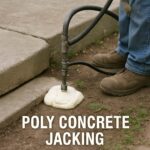
So, how do you lift tons of concrete without a crane? The secret isn’t brute force; it’s about filling the empty space—or void—that has formed underneath. To get there, a professional crew drills a few small, dime-sized holes directly through the sunken slab. These holes serve as clean entry points, or injection ports, providing direct access to the problem area below.
Through these ports, a two-part expanding foam is injected as a liquid. Once the two components mix beneath the slab, they react and expand with incredible force, behaving like a powerful, slow-motion car jack. The polyurethane foam expands into every gap, gently and precisely lifting the concrete back to its original level position.
Within just 15 minutes, the foam cures into a solid, waterproof, and extremely durable material. This void-filling under the concrete slab not only lifts the concrete; it creates a new, stable base that resists soil erosion or settling that caused the issue in the first place, ensuring a long-lasting repair.
When to Say “Yes”: The 3 Best Scenarios for Foam Lifting
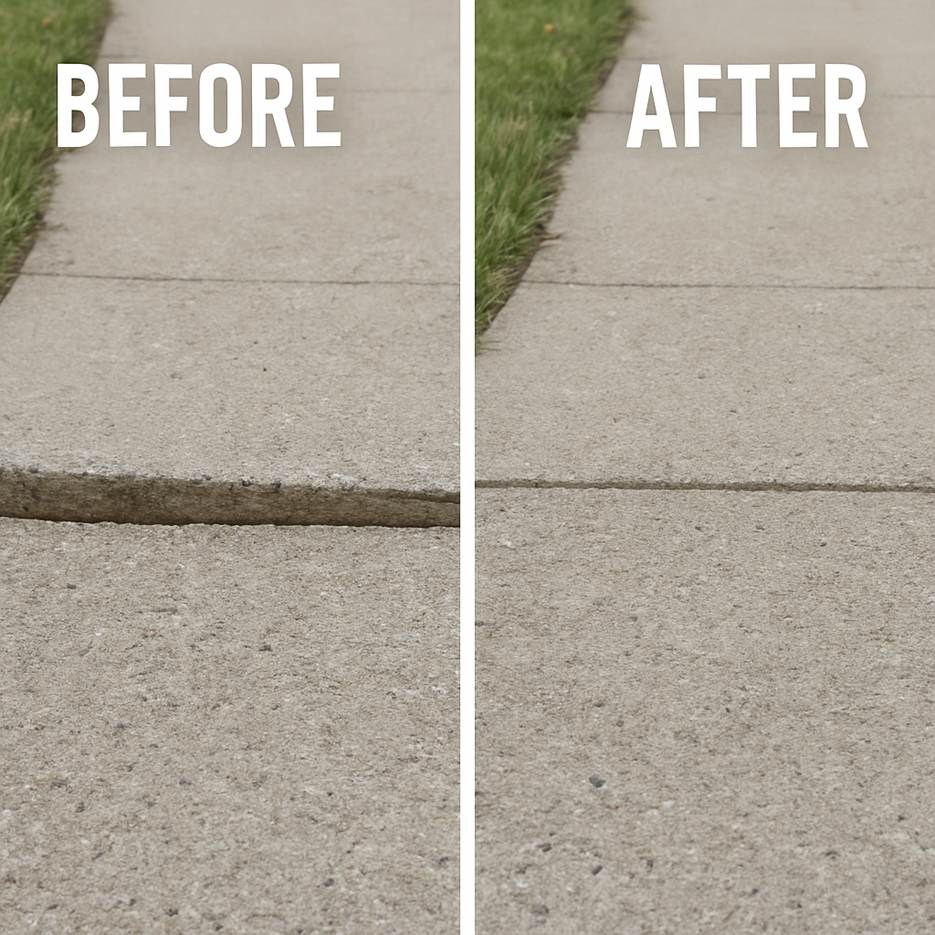
Foam lifting is the perfect solution for sunken slabs that are still intact. Think of a patio that has tilted toward your house, creating drainage issues, or the common problem of foam lifting for garage floor settlement, where one side has dropped and created a large crack against the wall. As long as the slab is in one or a few large pieces, it’s likely a prime candidate for this modern, precise repair.
In these situations, polyjacking offers major advantages over a full tear-out, making it a strong alternative to replacing concrete patios and walkways. The primary benefits of polyurethane concrete raising come down to three things:
- Speed: Walk on it in 30 minutes, drive on it the same day.
- Minimal Disruption: No heavy machinery tearing up your lawn.
- Cost-Effective: Often half the cost of demolition and replacement.
Essentially, if a solid slab has simply sunk, foam lifting can restore it quickly and affordably. But this powerful tool isn’t a silver bullet for every concrete issue. It’s just as important to know when it’s the wrong choice.
The Critical Red Flags: When Foam Lifting Is the Wrong Choice
While foam lifting works wonders on solid, sunken slabs, it meets its match with badly shattered concrete. If your walkway or patio looks like a spiderweb of cracks, as shown in the photo below, it can’t be lifted effectively. The expanding foam needs a large, stable slab to push against. When concrete is broken into many small, shifting pieces, the foam can’t lift them all evenly, which can actually make the surface even more hazardous. Think of trying to lift a shattered dinner plate from underneath—the pieces just won’t rise together.
Beyond the concrete itself, the most critical question is why it sank. Sometimes, the sinking is a symptom of a much larger problem. For example, if you notice persistently soggy ground near the slab, you could have a broken plumbing or sprinkler line washing away the soil underneath. Is the sinking happening right against your house, accompanied by new cracks in your foundation walls? These are major warning signs that point to deeper issues. In these cases, polyjacking isn’t a permanent solution because it doesn’t address the root cause; you’re just putting a temporary patch on an ongoing problem.
A trustworthy contractor’s job is to investigate these potential issues, not just sell you a lift. Ignoring these red flags means you’re likely to see the concrete sink again, wasting your time and money. Before you commit to a repair, it’s essential to confirm that simple, natural signs of soil settlement under the concrete are the true culprit.
Why Maryland’s Soil Makes This a Smart, Lasting Repair
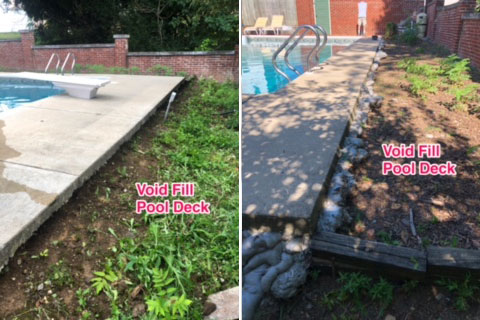
Here in Maryland, our clay-heavy soil is a primary cause of natural settlement. Clay acts like a sponge—it swells dramatically with moisture and then shrinks and cracks as it dries out, creating unstable voids beneath your concrete. Foam lifting does more than just raise the slab; it injects into these gaps and mixes with the loose clay, creating a solid, compacted base that resists this constant shifting and addresses our region’s specific soil compaction issues.
A significant long-term benefit comes from the foam’s waterproof nature. Once cured, it forms a solid, non-erodible barrier beneath your slab. This waterproof shield prevents rainwater and runoff from washing away soil in the future—often the very issue that caused the sinking in the first place. Unlike traditional mudjacking slurries that can erode over time, polyurethane foam effectively puts an end to the cycle of washout and settlement.
Homeowners are also rightly concerned about the environmental impact of materials used on their property. Modern polyurethane foam is an eco-friendly concrete raising option because once it cures, it becomes completely inert and stable. It will not break down or leach any substances into your soil or groundwater, making it safe for your lawn and landscaping.
Your 5-Point Checklist for Hiring a Concrete Leveling Pro in Maryland
Once you’ve determined that foam lifting is the right fix for your property, the final step is choosing a trustworthy contractor. Use this checklist to vet potential contractors and understand the factors behind the final cost to level a concrete slab in Maryland. Their answers will help separate the true professionals from the rest.
- Are you fully licensed and insured for this specific work in Maryland?
- What density of foam do you use for residential projects like mine?
- How do you determine the cause of the settlement?
- What does your warranty cover, and for how long?
- Can you provide references from recent, local jobs in the Maryland area?